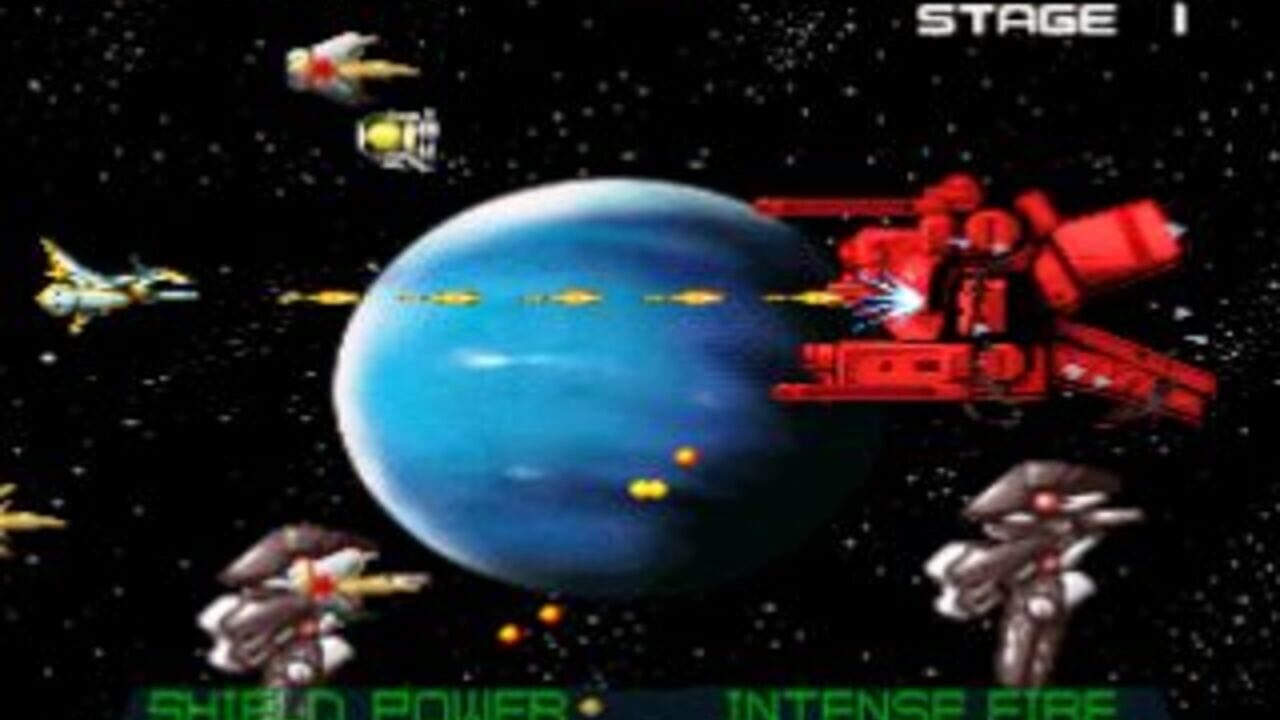

aia Seed is a horizontally scrolling shooter from Techno Soleil. The game comes from the fabulous line of classically-styled Japanese shoot 'em ups, bursting at the seams with parallax scrolling, screen-filling bosses and other classic effects that you could count on from the games of this era. But the real beauty of GaiaSeed lies in its subtlety. The game has tight control, precise bullet collision, and a simple powerup system, while the haunting soundtrack stands out for its techno/ambiance mood, adding to the subliminal nature of the work. You have a single ship choice and three difficulties. Gaming veterans will want to start on HARD, which differs only slightly if at all from NORMAL, and isn't particularly challenging anyway. You get two extra credits in NORMAL, for a total of 5, which is ample if you want to credit feed your way to the best ending. No one should touch EASY, since it limits you to reaching Stage 4. There are 7 stages with 3 possible endings, none of which are affected by credit usage. Power-ups consist of 2 main shots (RED and BLUE), 2 sub-weapons (YELLOW and GREEN), and an eIntense Shot' based on your main weapon which basically acts like a Power Bomb. Main weapons stack up to 3 times (RED: starts on 1 shot then 2, 3 and finally 4 shots), sub-weapons don't stack. Lose a ship and you lose your sub-weapon, while your main weapon goes down one level. BLUE is the Laser Shot, a straight line weapon with strong frontal attack which increases in thickness and power as you stack it. The laser's eintense shot' is a massive sausage of light cutting across the screen and wiping out all in its path. RED is Needle Shot. This is your typical V-shot weapon. Less powerful than BLUE, but when stacked 3 times has a wide ranging spread. The intense shot is a series of blue homing orbs target enemies and weak points on bosses, making this the best main weapon. GREEN is the Cipher Wave, the best sub-weapon since it fires four blobs which home in on enemies and can attack craft which are behind you, which is essential during boss fights. YELLOW is the Energy Blaster and acts like an additional V-shot weapon. Absolute rubbish. With such a simple weapons set most players will opt for a RED and GREEN combo for the game's duration. Which isn't a criticism. Gaia Seed doesn't distract you with superfluity; it's functional, with a focus on dodging and shooting. What's especially cool, and sets it apart from other shmups, is that both your health bar and Intense Shot bar are continuously recharging. This effectively gives you infinitely spawning power bombs and infinite health - but it doesn't break the game's balancing. Enemies frequently use screen-filling beam-based draining weapons, forcing you to let off a volley of shots and then scramble out of the beam's attack before your life is fully drained. With bosses this creates some intense battles of endurance - especially if you're trying to beat them by letting the timer run down (those are some pretty intense 120 seconds). After escaping a draining blast you can lick your wounds at the screen's edge, healing while avoiding bullet patterns. The patterns are fairly busy but without ever reaching danmaku levels of weaving. A slight comparison could be made to Deep Blue on the PC Engine, which had a recharging health bar and encouraged enemy avoidance (as pointed out by Mag Weasel). A mention must go to Gaia Seed's timed bosses. Defeating them by letting the timer reach zero doesn't do much during the main game apart from giving you a sense of accomplishment, but if you want to see the best ending you'll let the two final Stage 7 bosses' live. Visually almost everything is sprite based, though it varies in terms of quality. The first stage contains hundreds of massive though pixelated objects moving around, while the second has some interesting Mode 7 styled screen rotation effects. Stage 3 contains some decent parallax scrolling, though not as good as in Thunder Force IV. Subsequent levels are reasonable but without flair. The stand out element of Gaia Seed though has to be its soundtrack, which almost warrants download alone. It's extremely unconventional, being a blend of ambient music with chanting, classical music, hip-hop and thumping techno. Stage 2's track almost sounds as if it's been taken from Panzer Dragoon Saga. It's eclectic, strange, and very good. The sole composer was Xacs Ishikawa, also known as Naoto Ishikawa, a fairly obscure composer connected to works like Psyvariar and Touhou. Interestingly, he also collaborated with Harumi Shiina to remix Koji Endo's King's Field soundtrack, to create an album called Invitation to the Graveyard ~ King's Field I Arrange Collection.
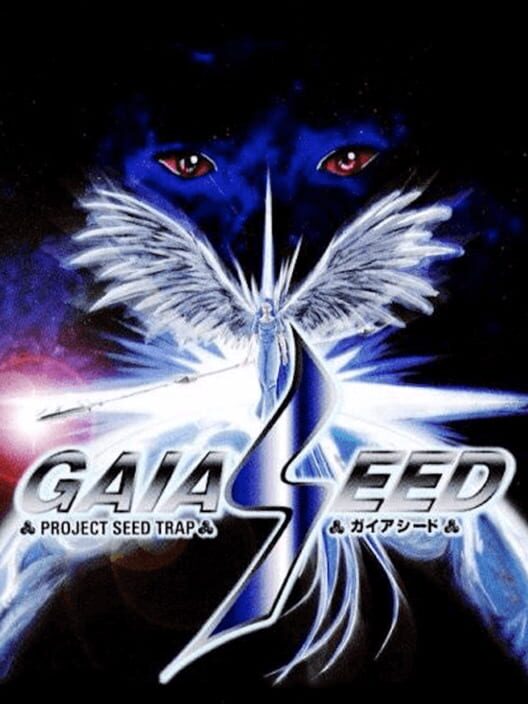
GaiaSeed: Project Seed Trap
PSP · 2010 · NTSC-U · Shooter
Activity feed builds as the eBay snapshot history accumulates and comp data flows in. First events surface within hours of a fresh cache cycle; full velocity within seven days.
Live listings
Active tier · Sealed. Aggregated from eBay US. Refreshes every 6 hours.
What it's actually worth
The three-tier spread, verified comparable sales, and where this title sits inside its cohort. Live snapshot lives above in Pulse; this is the time-and-context layer.
The same game at three prices — Loose, CIB, and Sealed on one ruler. The scale is logarithmic: each gridline step is 10×, so the distance between bars shows the size of the jump between tiers.
No verified comparable sales in window. Real comp data integration (Heritage / Goldin / eBay Insights) ships V15.22+.
No verified comparable sales in window. Real comp data integration (Heritage / Goldin / eBay Insights) ships V15.22+.
No verified comparable sales in window. Real comp data integration (Heritage / Goldin / eBay Insights) ships V15.22+.
Why collectors care
The cultural context, the production lineage, the place this artifact holds in its console's history.






- First print documented
- No
- Regional / language names
- Gaia Seed: Project Seed Trap
Is what you're holding real
Documented variants, identifying marks, and the print-vs-reprint discriminator. Pick a variant to focus the walkthrough; the Companion can talk you through your own copy.
Production reference
No production variants are documented for this title yet. The identifying marks below cover the title's first-print and reprint signals across all tiers.
Production reference
No production variants documented for this title yet. Identification reads against the title's known print signals across all tiers.
No documented marks for this tier yet.
No documented marks for this tier yet.
No documented marks for this tier yet.
Spotted a variant we missed, a print signal we overlooked, or an authentication trap collectors should know about? Contributing a photo or correction earns points toward store credit.
How contributions work→Where else this lives
Five cuts of what surrounds this title — switch the axis to drill into the same-console catalog, the series, the era, the publisher, or ask the Companion for a personal recommendation.


