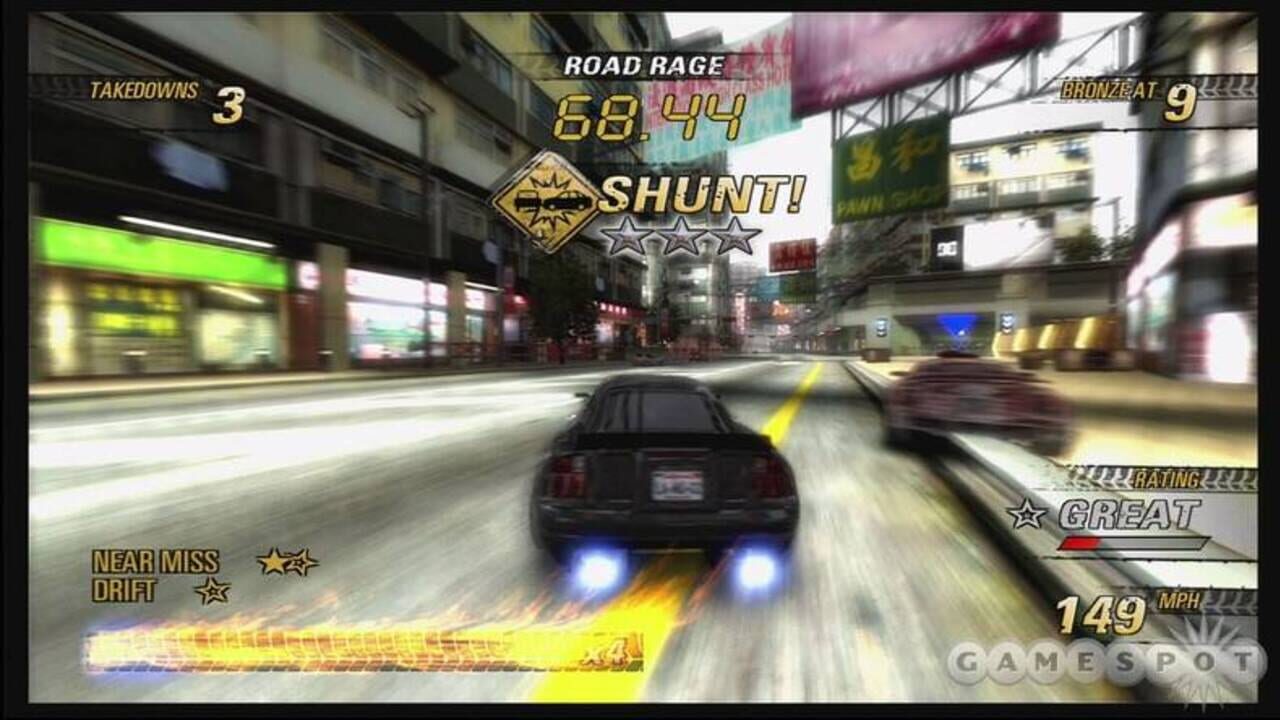
n Burnout Revenge, players compete in a range of racing game types with different aims. These take place within rush-hour traffic, and include circuit racing, Road Rage (where players cause as many rivals to crash as possible within a time limit, or until the player's car is wrecked), Burning Lap (a single-lap, single-racer time attack mode), Eliminator (a circuit race where every thirty seconds, the last-placed racer's car is detonated; the race continues until only one racer is left), and Crash (where the player is placed at a junction with the aim of accumulating as many "Crash Dollars" as possible). A new gameplay feature in Burnout Revenge is the ability to ram same-way small to medium traffic, known as "traffic checking", propelling the rammed car forward; the event in which a "checked" car hits a rival is considered as a Traffic Takedown. Traffic checking is the focus of a new race type, Traffic Attack (whereby a player must earn a set amount of Crash Dollars through checking traffic), which can be used later on. During these events, players have access to a limited amount of boost which is acquired through various dangerous driving techniques, including but not limited to driving on the wrong side of the road, tailgating opponents and drifting. Unique to the series is the concept of battling other rivals; unlike other video games in the racing genre, players are encouraged, and sometimes even required, to ram rival cars and cause traffic to crash. Causing a rival to crash is referred to as a "Takedown", rewarding the player by extending the length of their boost gauge and completely refilling it. In designated events, boost can also be used to activate a "Crashbreaker" during a crash, detonating the car and causing other nearby cars to crash. When the rival car takes the player down, the player will have to take the ultimate REVENGE by taking down the revenge rivals (which the arrow at the top of the car turned red) is referred to as "Revenge Takedown". In the main single-player game mode, players compete in a world tour consisting of 169 events across three continents, divided into a series of 11 "ranks" (Rank 11 has no events). The ranks which a player has access to is determined by their "Revenge Rank", which increases after completing events. By increasing their Rank sufficiently, the player "ranks up" and unlocks the next rank of events. There are 77 cars in the game, some of which can only be used for crash events. The SUVs and saloon cars are some of them. The game also features support for multiplayer gameplay, both online and offline. In addition to the racing modes, the game features three types of Crash modes: Crash Battle (multiple players attempt a junction at the same time), Crash Party (players take turns at attempting junctions across several rounds), and Crash Tour (a golf-like version of Crash Party, with players attempting to accumulate a certain amount of Crash Dollars in as few attempts as possible; after the last round ends the player with the lowest score wins). The Xbox 360 version of Burnout Revenge includes several new features and improves the graphics of the game to utilize the power of the next-gen console. The game includes 10 new crash junctions on the Crash Tour. It also includes a vastly improved online mode that introduces online Revenge Rivals. This system allows players to keep track of their number of times they have been taken out or have taken out any given player. The new version also includes a new Burnout Clips feature, which allows to save 30 second clips of any offline race played and can be shared with other players over Xbox Live.
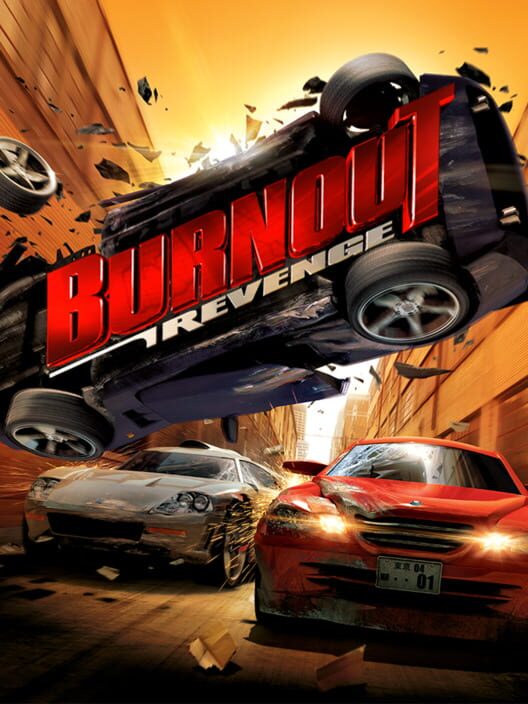
Burnout Revenge
Xbox · 2005 · NTSC-U · Racing
Activity feed builds as the eBay snapshot history accumulates and comp data flows in. First events surface within hours of a fresh cache cycle; full velocity within seven days.
Live listings
Active tier · Sealed. Aggregated from eBay US. Refreshes every 6 hours.
What it's actually worth
The three-tier spread, verified comparable sales, and where this title sits inside its cohort. Live snapshot lives above in Pulse; this is the time-and-context layer.
The same game at three prices — Loose, CIB, and Sealed on one ruler. The scale is logarithmic: each gridline step is 10×, so the distance between bars shows the size of the jump between tiers.
No verified comparable sales in window. Real comp data integration (Heritage / Goldin / eBay Insights) ships V15.22+.
No verified comparable sales in window. Real comp data integration (Heritage / Goldin / eBay Insights) ships V15.22+.
No verified comparable sales in window. Real comp data integration (Heritage / Goldin / eBay Insights) ships V15.22+.
Why collectors care
The cultural context, the production lineage, the place this artifact holds in its console's history.



- First print documented
- No
- UPC
- 014633151022
- Release date
- 2005-09-13
- Regional / language names
- Burnout 4
Is what you're holding real
Documented variants, identifying marks, and the print-vs-reprint discriminator. Pick a variant to focus the walkthrough; the Companion can talk you through your own copy.
Production reference
No production variants are documented for this title yet. The identifying marks below cover the title's first-print and reprint signals across all tiers.
Production reference
No production variants documented for this title yet. Identification reads against the title's known print signals across all tiers.
No documented marks for this tier yet.
No documented marks for this tier yet.
No documented marks for this tier yet.
Spotted a variant we missed, a print signal we overlooked, or an authentication trap collectors should know about? Contributing a photo or correction earns points toward store credit.
How contributions work→Where else this lives
Five cuts of what surrounds this title — switch the axis to drill into the same-console catalog, the series, the era, the publisher, or ask the Companion for a personal recommendation.